CPA Sugar Land AlternativeStafford has no city property tax
People often arrive because the building next door sits in a city that dropped this tax. Here is the public fact, without a savings pitch.
Compare the line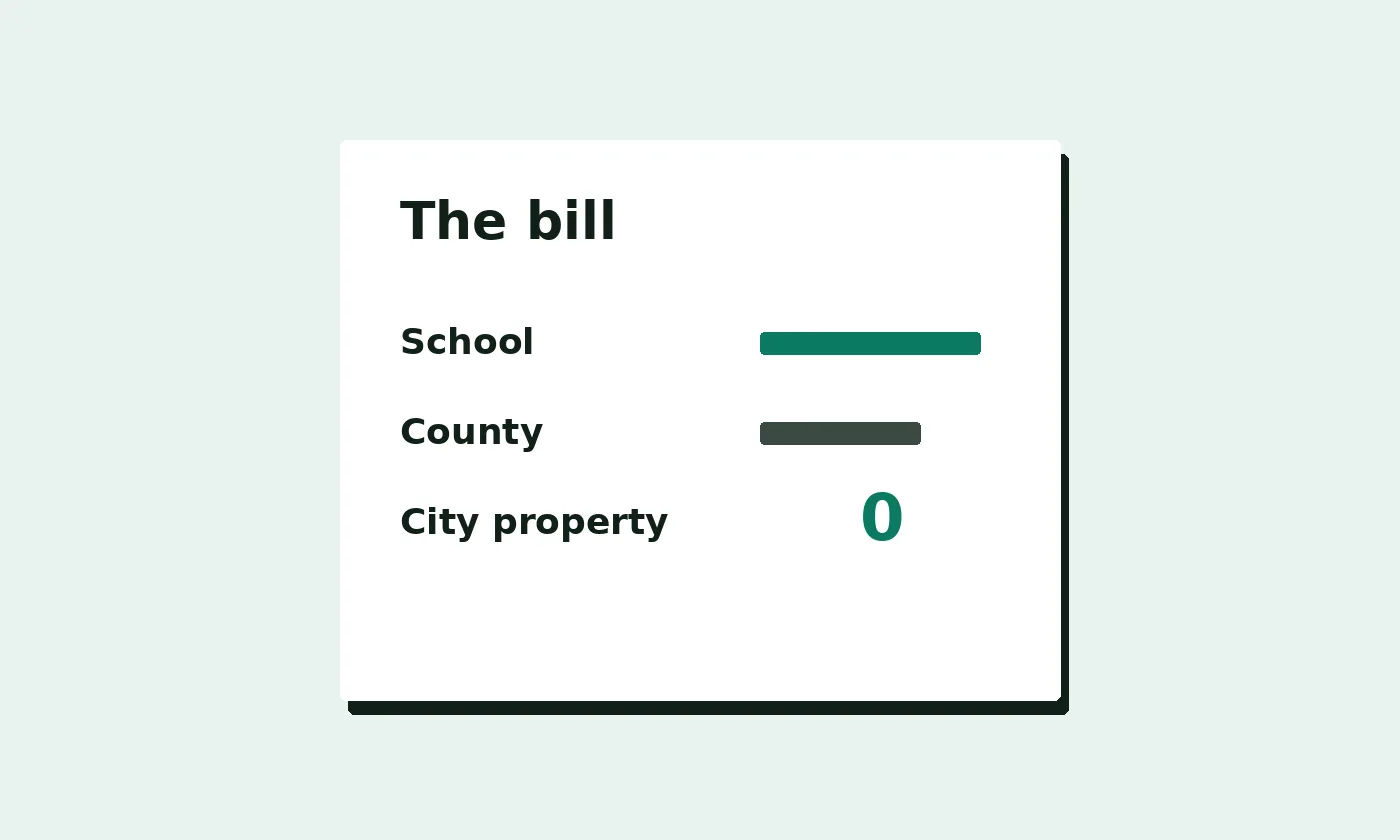
People often arrive because the building next door sits in a city that dropped this tax. Here is the public fact, without a savings pitch.
Compare the lineStafford, next door, calls itself the largest city in Texas to abolish the city property tax. It funds itself mainly on a 2 percent local sales tax, split 1.5 percent to the city and 0.5 percent to its economic development corporation. That is a different instrument from the property tax it does not charge. The source is Stafford's own tax structure page.
Sugar Land did not make that choice. The city adopted 0.371116 per 100 dollars for 2026. A lease that steps from one city into the other changes the property tax bill. It does not, by itself, change the sales tax story in a simple way, because both cities use local sales tax room. We keep the two instruments apart.
We will not tell you to move. We will not multiply the rate difference by your value and call it a result. Both figures are city sources. Your building has its own value, its own exemptions, and its own school district. The close names the city. It does not recruit you across the line.
No city property tax does not mean no property tax. School districts and the county can still appear. A reader who expected a zero bill and received a school bill has not found an error. They have found the lines that remained.
On the books, the fix is humble. The address on the lease gets a city. The property tax expense gets the lines the bill actually printed. A single account called property tax, holding two cities, is how the month looks calm and is not.
The other side of the river, southwest of town, is served by Lamar Consolidated schools and holds Greatwood and River Park. Every Texan can appreciate a wide bend of the Brazos. We share that picture with you. A building on that side is still a specific address, and the notice in the mailbox outranks a map in someone's head.
Start at the address, not at the total. If the address is in Stafford, look for the absence of a city property row and do not panic when school and county rows remain. If the address is inside the city that still charges a city property tax, the city row should be there, and a zero on that row is a question, not a gift.
Then read the school row on its own. A large school line does not mean the city tax came back. It means a school district still taxes the ground. The close records the lines the bill printed, under the names the bill used. A single account called property tax, holding two cities and a school district, is the mess we unwind.
Sales tax is a different page of the same story. Both cities use local sales tax room, so a move across the line is not a simple escape from sales tax. We look up the address before we lock the row. A special district can still touch some ground. Emergency services district number 8 is one example, at half a percent, and it is not the city rate.
Voters in the city next door made a public choice about property tax. We will not recruit you toward that choice, and we will not multiply a rate difference by a value we have not seen. The close names the city. Your decision about where to lease stays yours. If you already signed both leases, the work is narrower still. We put each address in its own place in the ledger, we match the bill to that place, and we stop. Nobody on this page will tell you to move a shop for a rate you saw online.
If the lease was signed years ago and the city limits later moved, the notice still wins over the memory of the signing day. Bring the current bill. We will read the city printed on it, and we will not argue with a boundary you remember from a drive. A bill from Stafford with no city row is still a real bill.
Sugar Land, Stafford, or you are not sure. Not sure is a fine answer.

You will be talking to the Steven Palmieri practice.